I relish written words. They are the soapbox for introverts like myself. My parents encouraged my siblings and I to read, starting early on with bedtime stories every night for our eager ears. When I was in grade school I spent an hour or more in the bathtub each evening reading books from the library, often irritating the rest of my family by occupying the shared bathroom for far too long. Summers were spent playing with friends all over my meager hometown, but like clockwork you could count on me spending time alone for long stretches, finishing at least a book or two a week. I never committed to a journal for longer than a few days at a time, but I always made time to write when inspiration or emotion beckoned me to blank pages. When puberty, and subsequently depression, crept into the awkward years of high school I would use dark imagery to write songs, poems, and prose. I longed for the gravity I carried to bleed out onto the pages and leave me be.
Mom, with the intention of protecting and monitoring, would snoop through our rooms. I knew this and would in turn snoop through her room, finding my folded notes and most personal musings tucked in dresser drawers amidst t-shirts and undergarments and her own private talismans. With each re-discovery of my own writings I would steal them away again, hiding them in a better corner of my bedroom. I grew more furious and resentful after every repetition of this absurd treasure hunt.
Then her and I would play a game of “I know that you know that I know”. Occasionally she’d approach me with a telling brow, demanding me to stay out of her room. But she never would explain further, as in, she knew I was in her room because my secrets were missing from her drawers. She didn’t want to admit snooping, so I played dumb and said “Sure, but I don’t know what you’re talking about.” It was our version of a standoff.
As I’ve gotten older I have learned how to get more comfortable with sharing my voice, but it has taken years of practice and humility and borrowed courage. Mom knows I write this blog but she has never read any of my posts. Once I read to her a piece I am particularly fond of, but she had no idea it was about her. Actually, I don’t think she was actively listening. Her mind had clearly wandered as I narrated. The blank look and lack of verbal response when I was done was all the confirmation I needed.
My heart tells me that if she were of sound mind she would be proud of my pursuit of creativity, the pursuit of my own self.
Toward the end of last year I submitted about twenty poems to a small publishing company’s annual public writing contest. Although I wasn’t selected for publication it dawned on me recently that this blog is an alternative platform to share my work. The poetry need not be shelved just yet.
Mom may no longer be able to appreciate my creative writing efforts, but I can still dedicate them to her. Mom, as much as these are for me, they are for you. My pain and my joy, I owe you gratitude for each as they have brought me closer to who I am and strive to be.
.
The following are inspired by or related to my experiences and observations as a caregiver for someone with Alzheimer’s.
Having two family members with cognitive impairment symptoms makes me question the future of my own health every time I experience forgetfulness. During select, quiet moments my mind wanders to the place of “What Ifs”. Spending time there can leave me feeling intense bouts of regret or worry.
The welcome sign upon entering this territory reads: “What if I end up having dementia too?” While within the boundaries of this ominous region it can be compelling to run around from scenario to scenario with wide eyes, lips pursed on the brink of screaming.
But there is a kinder neighborhood to be found in “What Ifs”: gratitude. Hear me out. Say the big bad thing, the “what if”, comes true. In my case that would manifest as getting dementia for one reason or another. If it’s irreversible dementia, like the early onset Alzheimer’s my mom has, then there’s nothing to be done about it. (That is, unless a cure is discovered in my lifetime).
If there is a possibility that my life span will be cut short by such a disease, it can feel like I have lost any semblance of control. This reaction is understandable, a natural recoiling when presented with a premature awareness of death’s assured march toward me.
With this awareness comes a more acute understanding of perhaps the most precious of all non-renewable resources: time. I don’t know for sure if dementia is my fate, but I do have one guarantee. I will, with inarguable certainty, die one day. And no matter what face my demise presents itself as, it will assuredly appear.
When I find myself turning the corner into “What Ifs” I need to force myself into the direction of this neighborhood of “gratitude”. It is where doubt and fear have the potential to shift into empowerment, an alchemy of attitude.
It would be in my best interest to spend my precious limited resource, time, as wisely as possible. This wouldn’t mean just dealing with the logistics of making end-of-life arrangements. The practicality of those tasks are important, of course, but there is more to life than death. While I’m here, with breath in my lungs and a splendid cadence in my heart, I should make it my mission to feel gratitude. Not only feel gratitude, but I should use that gratitude to incite my truest self. What thoughts and action have I been suppressing and need to act on before the opportunity to manifest them passes?
To use a cliché, this shift of perspective is easier said than done. We all know about the inevitability of death, but often do not live our lives in a way that honors that knowledge. Life is taken for granted until it’s gone or slipping away before us.
Today I cried twice, which is unusual for me since usually it takes a really bad day, an emotional conversation, or a particularly stressful event to get the waterworks going. Mom’s timeline on Earth is shrinking and the ugliness of that reality is becoming more challenging to ignore. It feels like she’s sliding through my fingers and there’s nothing I can do to hold on.
It’s always been a struggle to live my life as close to authentic as possible. I’m an empath. A helper. Often an overthinker. I can be selfish and stubborn (usually quietly unless in the presence of immediate family), but I am also very much invested in the wellbeing of those around me. I can be emotionally driven, which isn’t to say that those emotions are not backed up by logic. I’ve been afraid to speak my mind more often than I’m actually speaking. I’m avoidant of confrontation. My mind’s instinct is to keep the peace, but my heart’s instinct may be shouting to charge full speed ahead.
I’m still learning to accept some of these characteristics as traits to be take pride in. Others I’m learning to weaponize, to use to my advantage and for other’s benefit. And there are some I may eventually choose to let go of entirely.
But the magic of accepting gratitude in an atmosphere of fear is that with this alchemy we are given the gift of decisiveness. There’s hardly time to waste worrying about every little fear that makes up the weight of our true selves’ suppression. If there is no time to spare, there’s no time to sit and doubt, just do.
Again, easier said than done. But today I am making a vow to my mom, to me, that I will work on guiding myself closer to gratitude, not only in thought but in action. Otherwise, who’s life am I living if not my own?
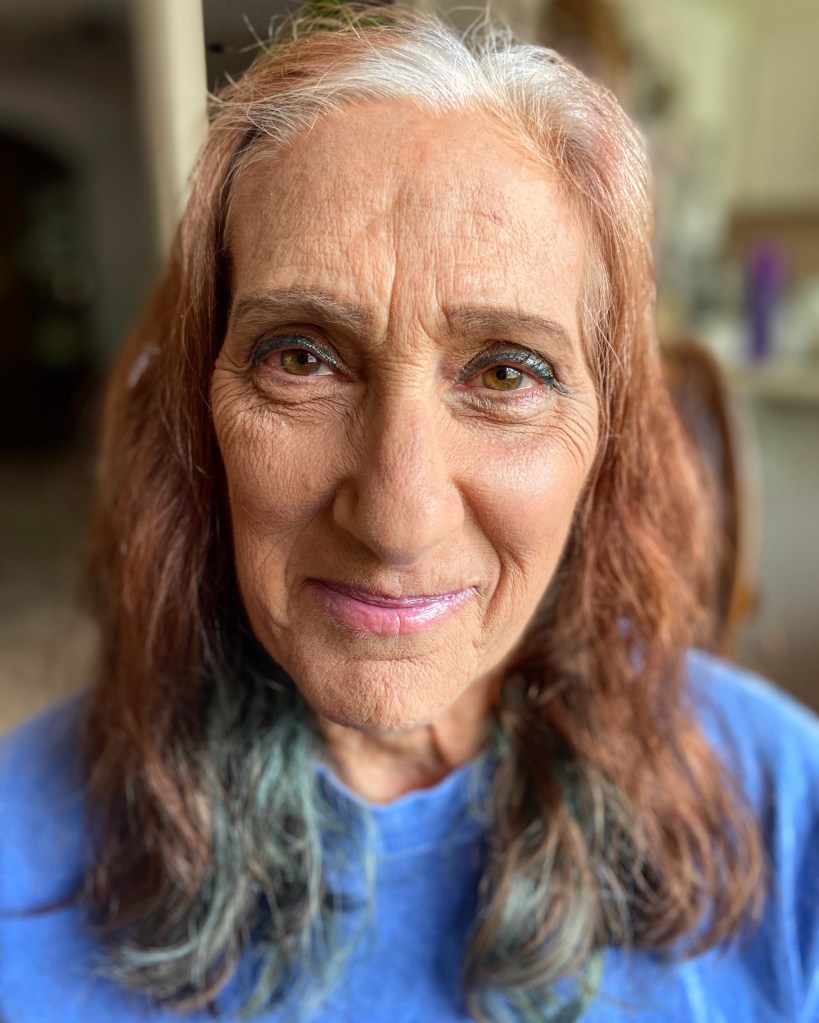
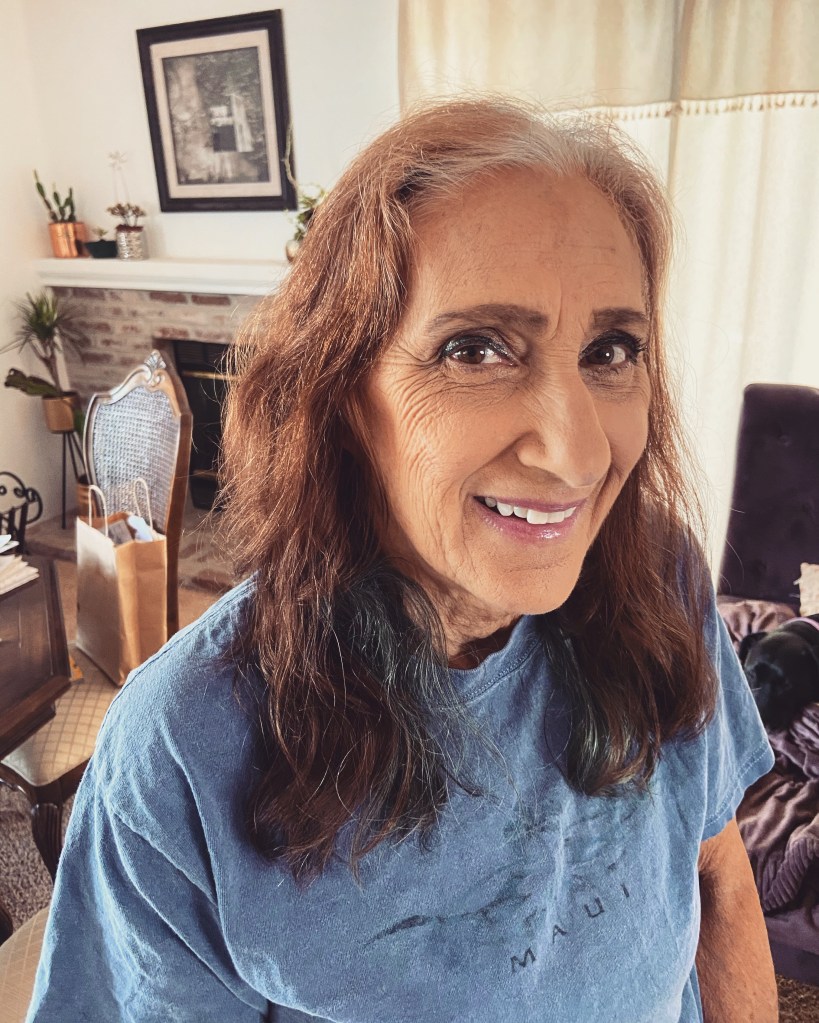
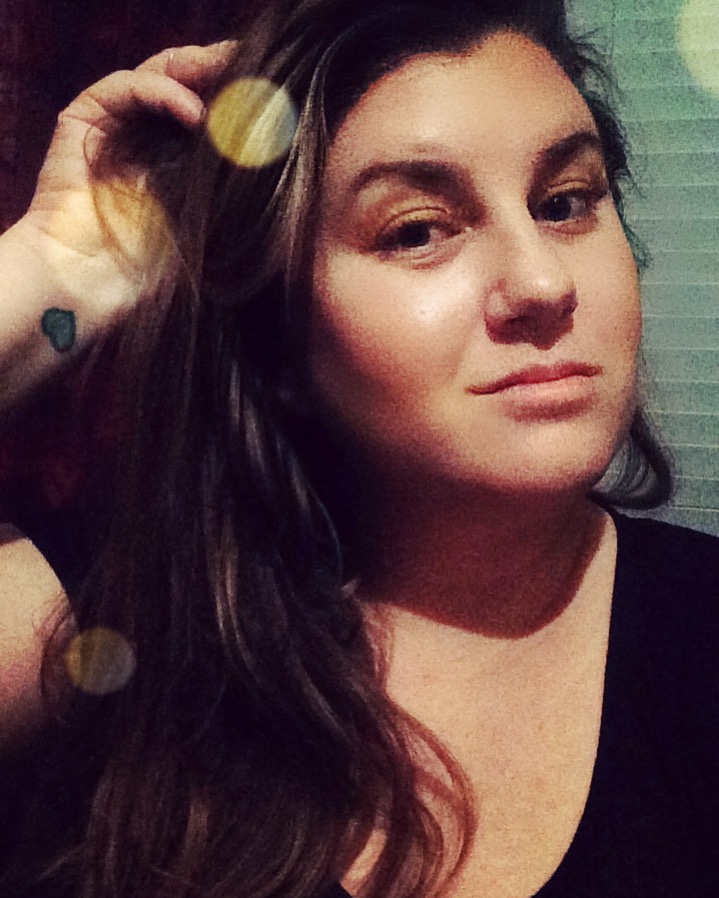
Evidence of Mom’s Saturday makeover. I cut off five inches of hair and she let me play with makeup.
For the last few days I’ve repeatedly sat down at my computer, typing the beginnings of an essay only to delete it after a paragraph or two. As of late I’ve been feeling exhausted, not burned out per say, but tired of being on the offense all of the time. I can’t focus all that well and my patience has failed me more often than I care to admit. Having to constantly multi-task, stay up to date about world events, and being unable to turn off the neon list in my brain of “Important Things To Take Care Of!”, has drained me considerably.
And now with the escalation of anti-racism protests how can I not turn my attention to what’s happening all around me? This is a momentous chapter in time.
I’m not here to make global issues about me. But I do want my readers to understand why this post is a bit different than previous writings.
This week I have for you not prose, but an update on what’s been going on in my little bubble.
I recently went out of town with my parents (who, might I remind you, are divorced) to my dad’s property in the middle of the woods, less than a tank of gas away from home. Last week was Dad’s birthday. With travel restrictions being lifted a bit and us having the privilege to remain socially distanced while on our getaway, we took the opportunity with gratitude. I was appreciative to spend time with my parents and be outdoors without having to worry about bumping into other people. I’m going to be honest though and say that it very much was not a true vacation, at least for me. With Mom there I was still “on duty” most of the time. Only on day three did I leave our property to go explore a forest service road a few minutes away. I was rewarded with my first (!) wild bear sighting. I’ve been to every state except Alaska and have never seen a bear until now. I was ecstatic.
Upon arriving home from the trip Mom and I very quickly realized that I had locked us out of her house. I was tired from driving for several hours, grumpy from the heat wave, and a bit worn thin from being on duty during my “weekend break”. Mom started cussing at me about having locked us out and I snapped. We ended up getting into an argument. After I climbed through a window and unlocked the front door we both needed time to calm down. By the next day we were back to normal, both suppressing memories of the ugliness we bared.
Yesterday, in between my attempts to write this blog post, I took some time to cut Mom’s hair and do her makeup. She never was one to wear much makeup pre-dementia, but I felt like being creative and gifting a small small gesture to counteract the weariness weighing on me. Afterward I picked up her request for dinner: sushi. I can’t say I was disappointed in her choice. As much as I love it, I’m tired of cooking.
That’s all I’ve got for you this Sunday. I don’t expect many people to read this as there are way more important things going on. But if you do see this please tell your friends, family, and community that you love them. Hug the ones that you safely can. Call the others you can’t hug. Lift up yourself by lifting up others. And remember that even in the days and weeks and years when situations are trying, time is always guiding us forward.
From time to time I wonder when it will happen. I imagine what her face might look like with slack expression, barren chestnut eyes. My presence won’t be frightening, but inquisitive. She’ll stand in front of me with the patience of a monk, but the answer she seeks may not find her. I’ll speak my truth to her, deliver her the answer with an undertone of subdued dread. She’ll furrow her brow, scanning for recognition, if any. I know repeating the words will likely be in vain, but I do it anyway. Again. And again. And again until the brine of my sorrow spills out of me, manifesting what I already know to be true. I can repeat myself a thousand times, a desperate ripple of perseverance. Maybe if I shout it? Or speak it underwater? Or tie it to a tree so it waves to her like a triumphant banner in the breeze. I could give it to her in the form of a pebble. Let her roll it around the crook of her palm, pick it up to examine its entirety before setting it on the ground to nestle amidst the nothingness of the rest. I’ll whisper it in her ear, hoping the softness of my voice will breathe the truth gently to life.
With each attempt to tell my monk, a desperation will ascend. Still she will stare. Still she will ask me to speak it again.
“One more time. Who are you?”
I cannot bare the thought of this moment so I write it down and keep it tucked away from my body. I give it physical life so that that when the time comes I can tip a burning match to it, incinerate its existence with the flick of a wrist.
There are many monks like this, precious beings unwillingly dedicated to a quiet, destructive god. They pray with their mouths, forming words out of order in a language few can comprehend. They wander on pilgrimages to places we cannot see or imagine. They sacrifice their bodies, pay tithing in memories until there is nothing left to offer but organ and bone.
Heathens like me pity the monks. We understand no efforts can change their ways. There’s no untethering from this religion. So we take over what the monks cannot do for themselves. Too indentured to their parasitic god to eat or bathe or speak or blink, we take them in our arms and homes. We brush their hair and feed their soft bellies. We keep them from harm or further influence as best we can. We offer them our own memories as anti-sacramental bread, hoping to poison the god. We kiss their eyelids so as not to show our own tears when our efforts inevitably, and always, become futile.
The monks are lost souls who were never lost in the first place, not really. They’re right here. And yet they’re also so very far away, walking further and further from our reach until we have no choice but to let go.
When my monk finally disappears into the distance I will say one last time, “It’s me Mama. It’s Lauren. I love you.”
***In April of 2018 I had decided to take my mom on vacation to Hawaii. It was to be the first time we had traveled together since her Alzheimer’s had kicked into high gear. My first visit to this magical swathe of islands was as a graduating high school senior. She had saved for a few years to be able to treat us to a celebratory vacation. Finally, at the age of thirty, I was able to return the gesture. I originally published our experience on my travel blog. Now, on the anniversary of our trip and with nostalgia for being anywhere but quarantined, I am re-publishing this essay here. I figured this disclaimer would be necessary so that no one would think that I had recently carted Mom off to Hawaii in the middle of a pandemic. We have been safe at home for just about eight weeks. With that out of the way, please enjoy the essay below.****
Is a vacation still vacation if you are stressed for most of it?
I fumbled with this question often since returning from my trip to Hawaii last weekend.
I have always wanted to do some sort of grand gesture for each of my parents. With Mom’s cognitive and physical abilities being stolen away like the cruelest of heists, I had been feeling compelled to arrange something special for her before she could no longer comprehend or enjoy such an experience.
The pricing wars between Hawaiian airline carriers had been amping up recently. Typically a good deal for a roundtrip flight to Hawaii from the West Coast is about $400. When I came across deals for $200 roundtrip flights you can understand why I was anxious to jump at the opportunity. By using my Chase credit card points I was able to get our flights, hotel accommodations, and rental car for free. I live paycheck to paycheck, but hacks like this, among other things, really help offset the cost of travel.
On Wednesday of last week we flew from San Francisco to Kona on a direct flight. Going through security with my mom gave me an indication of what I was to expect for the duration of the trip. She struggled to control her rolling suitcase if it was moving any way but straight, at one point catching it on a waiting-line divider. She ended up crumpled on the floor. Some of the people near us quickly came to her assistance. She was a trooper, only embarrassed for a second, and then moved on.
I constantly struggle with gauging how much I should do for her and how much I should let her do herself. Often it’s easier if I just carry her belongings or buckle her seat belt or put her hair into a ponytail, but sometimes I can tell she wants to do it herself because she doesn’t want to feel like a burden or as if she’s a child. I try to allow her the time to do things on her own, but I can get annoyed, or we have somewhere to be, so I take over and do it myself. And then I feel like a jerk, especially on the occasions she is aware I’m being too bossy.
“Lauren, stop talking to me like I’m two.”
I inhale and pause.
Teeth clamp down on my tongue, holding it in place before it can wriggle free and inflict damage.
It’s frustrating to me how I can be completely comfortable with handling children who are having a bad day or are scared, screaming and crying, grasping my arms with a strength unexpected from two year olds. And yet with my own mother the calm, smiling patience I have practiced for the last fifteen years as a swim instructor and nanny can dissipate five minutes into a difficult interaction. Alzheimer’s is the test of patience that I never imagined I would struggle with. This disease is a reminder that no matter how masterful I am at something, there’s always room for more learning. Life will always humble you, especially when you think you are beyond the necessity of being humbled.
We arrived in Kona with anticipation. After an odd encounter with a rental car employee who tried a few times to take the automobile damage report form out of my hands before I had finished completing it, we sought out food. A few minutes from our hotel was the Poke Shack, a pricey hole-in-the-wall joint. With a lunch plate between us and cold beverages in hand we finally began to sink into island mode.
Afterward we drove up the road to Magic Sands Beach, a popular but picturesque slip of a beach. I set up my hammock while my mom soaked her feet in the gentle, salty waves.
“Lauren, what’s on the other side of the water?”
“What do you mean, Mom?”
“Well on the other side of Lake Huron there’s Canada. So what’s on the other side of the water here?”
“I guess Australia, but that’s hundreds of miles away.”
After passing time at the beach we checked into the Kona Seaside Hotel, bought five days worth of groceries, and took a dip in the hotel’s pool.
The next day we made our way along the west and north coasts to a few viewpoints, parks, and beaches, eventually ending up in the town of Volcano. I had rented a condo with a kitchen just outside Hawaii Volcanoes National Park. Taking Mom to this park was the highest of priorities. The magic of HVNP had branded my soul since my first visit a few years. I had been longing to return ever since.
Struggling to locate the condo, I called the number of the rental company. A man asked, “Did you use GPS?”
“Yes.”
“That’s why you can’t find us. The GPS doesn’t work correctly. I sent the directions to you.”
“You did? I don’t believe I received them,” I said.
“And what kind of vehicle do you have?” he inquired.
“A Nissan Altima.”
“Well in the email I sent you I also mentioned that our driveway is a 1.2 mile dirt road with pot holes, so it’s best to rent a Jeep or an SUV.”
“Oh. Again, I didn’t receive any of this information so I had no idea,” I responded.
“You’ll be fine,” he said. “Just drive slow and you’ll do okay.”
He texted me the directions and within a few minutes we had arrived at the property. Rick, the owner, greeted us and showed us around. It turns out that I hadn’t booked a condo like I had thought, it was a room at his house. “No worries,” I thought. “We’ll just go with the flow.”
As he led us to our room he mentioned that drugs, alcohol, and meat (seafood included) are not allowed on the premises, even in our room.
Shit.
I didn’t contest it, but I did make a point of politely saying, again, that I had not received any of the information about the property or its rules upon booking, except for a physical address. If I was traveling by myself it wouldn’t have been all that big of a deal for me to have a change in plans like this, but with Mom it was going to be a challenge.
“But I like to enjoy a glass of wine with my dinner,” she said, confused.
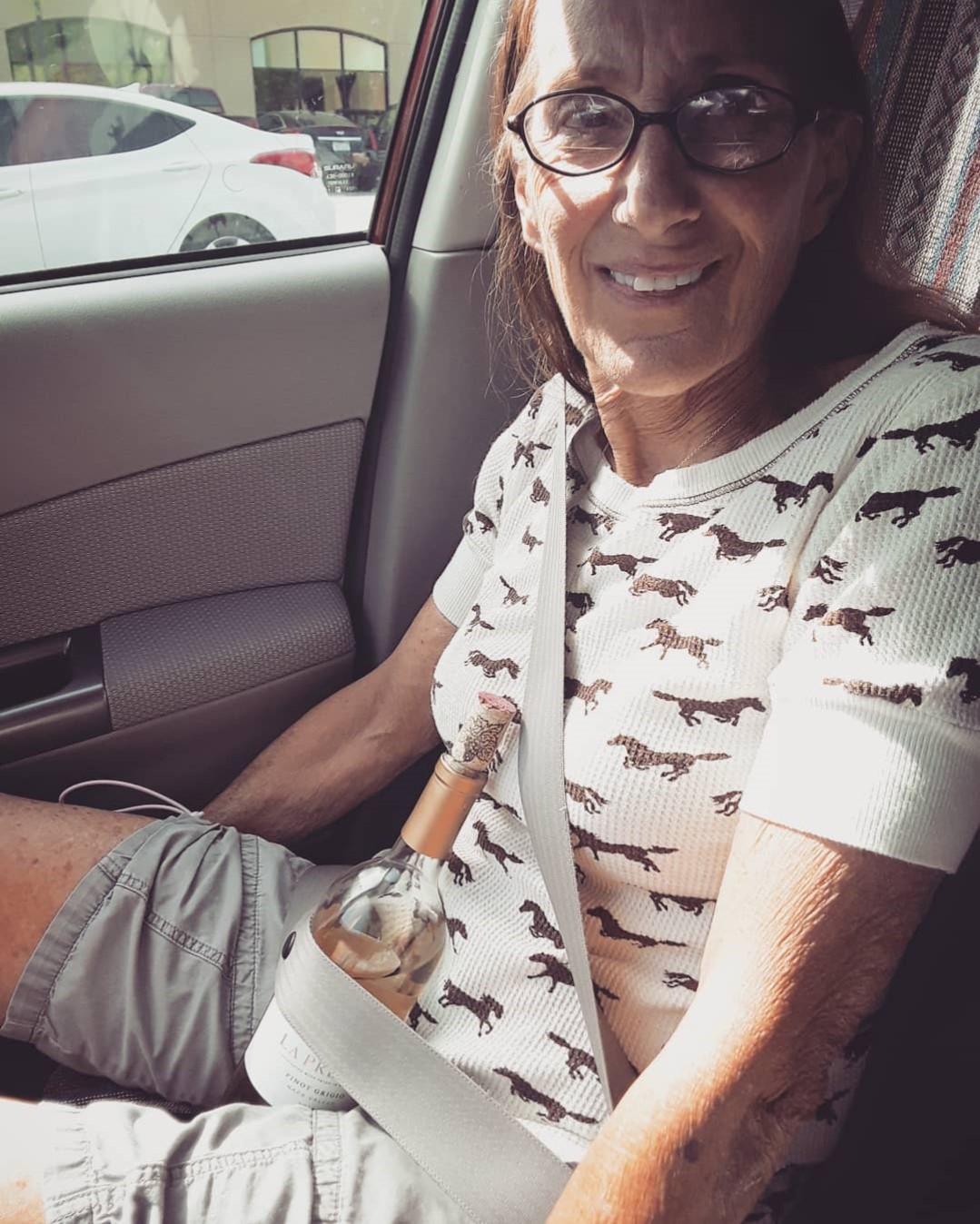
“It’s okay Mom, we’ll get a glass of wine elsewhere for dinner,” I quickly spat out before Rick engaged in what could potentially be an escalated conversation. A few moments before I had let him know that she has Alzheimer’s but I wasn’t confident that he would understand the nuances of guiding conversations with her.
Once Rick left us to unpack my Mom asked again and again about the rules. She didn’t get why we weren’t allowed to have wine, especially since we had bought a bottle at the grocery store the day before. My patience was beginning to chip away.
Our room was spacious, very clean, had a small fridge and a charming bathroom. Rick told us that in his kitchen a simple breakfast was complimentary from 7:30-9:30am, with tea, coffee, and use of the microwave was available during that time frame. The microwave was also available for use from 5:30-7:30pm. At first this seemed reasonable, although not anything like the full kitchen I had expected with my booking. But soon we would find that these unexpected rules and limitations were going to suffocate our vacation.
The following morning I assembled lunch for us to take to HVNP. As it was early and not during kitchen use hours, I MacGyvered some sandwiches for us. I used a large coaster as a cutting board and a disinfected library card as a knife to “slice” cheese and tomatoes. The results were tasty, but those were the most mutilated tomato slices I’ve ever laid eyes upon. I have had to make do with limited food prep options while camping or in my dorm room in college, but this was another level entirely.
We spent the day stopping at each pullout in the park. Every handful of minutes I was turning my blinker on again so I could show Mom another dormant crater, volcanic rock field, or rainforest trail. Our mutual awe of the landscape, of the inexplicable vibe of the land, was exactly the kind of experience I wanted to share with her.
At one point I walked her down a short trail to the mouth of a lava tube. She doesn’t like the dark, especially caves, but I reassured her that it was something not to be missed. We held hands on the dimly lit path as I told her how lava had once traveled through the organic cave, like a molten subway. I played the mother and she the child, our roles irrevocably reversed. We pretended to be okay with the osmosis of our biological attributes.
In moments like this, dementia is precious. Other times it is the reminder of all that is beyond our control.
Returning to our rental I mentally planned on how to make the evening go smoothly. I encouraged Mom to take a shower while I got dinner ready. I had a package of spaghetti noodles and a can of tomato sauce that had been purchased on our grocery excursion a few days earlier.
I grabbed the box of dry noodles and walked to the kitchen. Rick was there speaking with another guest so I waited until I could interject without being rude. His wife walked in at that moment and approached me. I had met her briefly the day before but hadn’t seen her since.
She asked if I had used the kitchen that morning and whether or not I was planning on eating the continental breakfast the next day. I explained that although I would love to take advantage of the complimentary meals, my Mom and I would be eating our own food as I had bought groceries. I didn’t want the food (or money I had spent) to go to waste. She seemed offended that I wouldn’t be eating the fruit and granola she prepares for guests.
And then the unraveling began.
I asked her if it would be okay for me to boil the pasta noodles. It wouldn’t take more than 10 minutes and I’d only need to use one pot.
“No. You can’t use the stove, Lauren,” she said curtly.
“Oh, okay. It’s just that I need to make dinner for my Mom and I.”
“We don’t allow guests to use anything except for the coffee maker and the microwave.”
“Okay…hmmm,” I replied, starting to get a little perturbed. “It’s just that I was unaware of the rules of this property before I arrived. Like I mentioned to your husband, I bought groceries when we landed on the island because I was under the impression that I had rented a condo with a kitchen. I understand that you have rules in place, but I just need to boil a pot of water for noodles.”
“You’re not going to use the stove Lauren,” she spat. “You can make your noodles with the hot water from the tea kettle at the coffee station. I’m sure you could look up something online about how to make them.” Then she turned and walked away.
I stood there dumbfounded, trying to keep it together. It wasn’t that I was angry, per se, I was humiliated. Here I was in someone’s million dollar home practically begging to boil a dollar’s worth of pasta for my disabled mother and I to eat, and she refused to show an ounce of compassion.
I tried to keep my tears and pride from escaping as I broke up spaghetti noodles into small coffee mugs, pouring hot water meant for tea into each of the mugs. By the time I walked back to the room with the al dente noodles and tried to stir plain tomato sauce and butter into them, the noodles were cold and had clumped together.
And then my mom started asking about why we couldn’t have a glass of wine with dinner and why we were eating cold noodles out of mugs, and why Rick and his wife had such outrageous rules.
I was just about at my breaking point.
“Mom, let’s go. We’re going to get dinner somewhere else.”
I drove us to the nearest town with cell phone reception, Hilo, which was 35 minutes away. The more that went wrong, the more Mom became unwound and less able to understand and cope with the situation. I snapped. I yelled things I shouldn’t have said and only made things worse. You can’t scold someone with Alzheimer’s for their behavior. I know that. And even as the words flew out of my mouth I thought, “What the hell am I doing?”
I bought Taco Bell for us which she refused to eat, her body twisted away from me in the passenger seat, face hidden behind her hands.
“Don’t fucking talk to me!”
I got out of the car and made a phone call to the credit card company. For nearly two hours I tried to get the travel department to find us other accommodations. It was Friday night in Hawaii. Pretty much everything was booked up and they apparently don’t make same day reservations.
I ended up telling the rep that I would try and find something on my own because there was no way I could stay where I was at. It was 9:30 at night, I was exhausted, drained of patience, and wholly frustrated. I asked the rep to have someone return my call because I still needed the situation resolved. I wanted either a credit back for the room I had booked or a refund on the new accommodations I would need to make. Chase was responsible for not including the property information and regulations on their booking site, or emailing it to me at any point leading up to my trip. There is no way I would have rented this type of AirBnb-like setup, spent money on groceries and wine, nor chosen a small rental car, if I had been forwarded all of the stipulations of the rental.
Mom and I made up, equally spent from all of the drama. All we wanted was to enjoy what was left of our time on the island. We were on the same team again, partners in tribulation forging forward.
The next morning I packed up our suitcases and the remainder of our groceries into the car. I found Rick and handed him the key to our room so I could get back the $10 security deposit for it. I don’t think he realized that we were leaving a day early.
“Did your mother enjoy her stay?”
“No, not really. That’s why we’re leaving.” The look of surprise on his face only added to my annoyance.
He walked with me to my car and offered to help with the luggage.
“Thanks but I’m already packed.”
Before Mom and I drove the two hours back to Kona on the other side of the island we made two stops, the first being Black Sand Beach. There we spent a few hours standing in the surf, debating whether the sea turtle on the beach was alive, and napping in the hammock. The dust had settled and we were finally able to really be present again.
The second stop was at Ka’u Desert Trail. This had been one of my favorite hikes I had ever done. I ached to do a proper hike while in Hawaii, but Mom had a bad knee and couldn’t walk for more than a mile or two on relatively flat trails.
Twice I paused along the path so I could place a hand on the volcanic rock, closing my eyes and breathing in the energy from the earth. The magic and nostalgia of that place is a powerful life force for me.
Once in Kona we settled into an over-priced, tiny condo for our final night of vacation. It was nearly the only last minute option available, but at that point it was more important to put some distance between Rick, his wife and their house, and us. Plus, this condo had a kitchenette.
Thank God.
The next day just a few hours before boarding our departing flight, we sat at a picnic table on a beach soaking up a few last quiet moments. We shared a peanut butter milk stout and watched the planes roar over our heads as they landed at the airport behind us.
Can a stressful vacation still be called “vacation?” I’m still not sure.
Hawaii was a chapter that would be remembered differently for each of us. For me it was an experience of beauty highlighted with many moments of frustration and grit and complicated undertones. For her, it was the escape to paradise that her memory will clutch on to for as long as it can. Most of the unpleasant aspects of the trip have been discarded, whisked away by disease.
Anxiety is a strange beast, able to shift and mutate seemingly at will. It can disguise itself as any number of symptoms, sometimes making it difficult to self-diagnose.
Per WebMD.com, some signs are as follows:
Emotional symptoms of stress include:
Becoming easily agitated, frustrated, and moody
Feeling overwhelmed, like you are losing control or need to take control
Having difficulty relaxing and quieting your mind
Feeling bad about yourself (low self-esteem), lonely, worthless, and depressed
Avoiding others
Physical symptoms of stress include:
Low energy
Headaches
Upset stomach, including diarrhea, constipation, and nausea
Aches, pains, and tense muscles
Chest pain and rapid heartbeat
Insomnia
Frequent colds and infections
Loss of sexual desire and/or ability
Nervousness and shaking, ringing in the ear, cold or sweaty hands and feet
Dry mouth, and difficulty swallowing
Clenched jaw and grinding teeth
Cognitive symptoms of stress include:
Constant worrying
Racing thoughts
Forgetfulness and disorganization
Inability to focus
Poor judgment
Being pessimistic or seeing only the negative side
About ninety-percent of these apply to me (hello especially to chronic intestinal issues, being pessimistic, and inability to focus). It’s easy to discount the mass of symptoms on any given day. To think about them all would be to animate them, and that is too insufferable to face most of the time.
I began caregiving for Mom in 2017, but not until the end of last year did I really start to pay proper attention to the physical toll on my body and mind. In March of 2019 I experienced my first instance of intense chest pains, seemingly out of the blue. Similar to the famous scene in Indiana Jones and the Temple of Doom, it felt as though someone had shoved their hand into my chest cavity, grasped my heart fiercely with an angry fist, and was trying to remove it. My body felt weird, not tingly or numb, but ethereal. I compare it to the body high that can happen when you ingest marijuana. It’s as if my body was a bit weightless, like it wasn’t mine and yet also mine, all at once. My body, for a few moments, was no longer in my control.
The day it happened was otherwise ordinary. Leading up to the moment in question I was sitting on the floor watching a kid play with his toys. I hadn’t eaten anything that could have triggered heart burn, which I had experienced before but knew with certainty felt different from this. The pain lasted about ten minutes or so. I was really close to calling 911, but the unreasonable hesitation that comes when asking for help for oneself caused me to wait it out.
Finally the pain subsided. Shortly after I called my medical provider and spoke with an advice nurse. After deciding against the emergency room, I went on with my day, cautiously. I made sure to tell Dad what happened as well as the friend I hung out with that evening. That way if it happened again, or I had other concerning symptoms, they could tell medical personnel on my behalf. It sounds nonchalant, I know, but there’s nothing to be changed about that day now.
A month after moving in with Mom, which was coincidentally also day three of being evacuated from our home due to a large wildfire encroaching on our town, it happened again. This time in the middle of the night. I awoke seemingly without provocation, until I felt the now familiar cinching of my heart. It lasted for about five minutes and I went right back to bed afterward, too tired and relieved it was over to do anything but return to sleep.
The third instance also came during sleep, jolting me out of bed after midnight. Ten minutes passed. It left as swiftly as it came. I spoke with an advice nurse again. Per protocol he offered for me to either call 911 or come into the emergency room if I felt it was necessary. After I declined he made an appointment for me to see a doctor that same morning, a few hours from then.
The doctor I met with for my appointment, not my primary physician, was wholly unconcerned. The only physical examination he did was to stick his stethoscope on me to listen to my chest briefly. He told me it was probably heartburn since I “didn’t have any family history of heart conditions,” despite my mention that a grandfather had died from a heart attack. Only after I started to tear up did he offer to schedule an ekg treadmill test for a few weeks later.
I ended up cancelling it because the appointment was two weeks shy of when my new health insurance would kick in, which meant that the out-of-pocket cost would be about a third cheaper. America.
Then I forgot to reschedule, too wrapped up in day to day life.
Unsurprisingly I had a fourth occurrence. This time it happened on Valentine’s Day in front of both parents. At its onset I promptly walked away from Dad mid-conversation and sat down on Mom’s front porch. I couldn’t talk, only clutch my chest. He drove me to my health care provider but they didn’t have any appointments available as it was a Friday and the day before a three day holiday weekend. I refused to go to the emergency room because at this point I knew what to expect from the chest pain. It was, unfortunately, routine. Dad was freaked out. Seeing my symptoms in person caused him to understandably be really concerned and almost panicked. He thought I was dying. Despite the pain lasting for nearly twenty minutes this time, I was calm. I spoke with an advice nurse for the entire car ride to the hospital. I repeatedly had to explain to my frustrated father that no, it wasn’t bad customer service for the doctor’s office to be unable to fit me in. Appointment based services are just that, for appointments. I knew the drill with this mysterious “heart attack”. It would eventually go away like it did every other time. So in an attempt to calm him down I told Dad to “go ahead and cart me off to wherever you want if it happens again today or if I pass out. I give you permission. I just don’t need to go to the emergency room right now.”
He made sure to tell me how stubborn I was being. I didn’t fault him for that because it was somewhat true, so I appeased his wishes. Sort of. He dropped me off outside of the emergency room, which I never stepped into. I sat on a picnic bench until my best friend came to pick me up an hour later. His parting words were “I won’t take any part in you dying. Call me when you’re ready to be picked up.” I valued his fatherly concern, as it was an absolute display of his love for me. But I also felt like I knew my body and the reoccurring symptoms. I wasn’t going to win no matter how much or little I tried to reason with him.
An appointment with my primary physician was made for the following week. After an ekg and a lengthy discussion, it was determined by both of us that I was most likely experiencing panic attacks. Often they can be mistaken for heart attacks because they have some of the exact symptoms. Chest pain. Dizziness. Paresthesia (a feelings of tingling or numbness). Testing can help distinguish between the two.
It has been a several weeks since that eventful Valentine’s Day, but I feel better now that I have a feasible answer as to what is going on. With diagnosis comes treatment, so I’ve been trying to be better about focusing on self-care, having better self-awareness when there are instances of extremely high stress, plan on signing up for therapy, and have been prescribed as-needed anti-anxiety medication.
Self care has obviously become exponentially difficult to do while being quarantined with Mom for nearly two months, but I’m doing what I can. I qualified for grant money that pays for respite care, but due to COVID-19 I have concerns about someone coming in our home to spend close contact with Mom. Anyway, where would I go for the day? It’s hard to plan when the rules of nature and laws can change day to day in these strange times.
I’ve had to take the anti-anxiety medication that my doctor prescribed, as well as CBD gummies, on several occasions since we first went on lock down. I’ve utilized yoga and tapping and breath exercises. I’ve danced. I’ve experienced numerous instances of fluctuating anxiety, melt downs, and crying fits. I’ve gotten flustered. I’ve yelled. On low days I laid in bed for hours. I’ve found it difficult to focus. I sometimes stay up until two or three in the morning, illogically fighting the sleep I know I need.
Not every day has been like this. Some have been quite tolerable, enjoyable even. But the tough days seem to outweigh their counterpart, especially during the first half of quarantine.
Let this be a reminder for myself, and to you, that if we don’t take care of ourselves we will not be able to sustain care for others. It’s the same as the oxygen mask principle on airplanes. Put on your own face mask before helping attach anyone else’s because if you pass out you’ll be of no use to anyone. This pandemic can make many of us experience “survival mode” to varying degrees, depending on how deeply we’ve been affected by this virus, but please, put on your literal and figurative masks. Not just for health and safety, but for sanity’s sake.
When the days were unravelling from spring to summer it came to my attention that two bands who regularly lived in my headphones would be touring together. Shakey Graves and Lord Huron were scheduled to play at the Greek Theater in Berkeley for the first Friday in August. Summer is the busiest time of year for me so taking long vacations is out of the question. I dogsit for about six weeks of the season, teach an average of two-hundred swim lessons a month, write and research for this blog, and of course, maintain caregiving duties. Sanity is dependent on the sprinkling of activities and “me time” I allot myself during these months of high workload. A concert is typically a quick treat that puts space between me and the excessive commitments, so the decision to buy tickets was easy. That, and I had been dying to see these musicians perform live for quite some time.
With two tickets purchased I marked my beloved paper planner for August fourth. It seemed a decade away.
The abundance of order and repetition made the
weeks go by like clockwork. My schedule was often the same, slightly manic and
fast paced and highly structured. By the time August rolled around I was ready
to get out of town for a bit, even if it meant driving just an hour away.
I had planned to bring a friend to the concert,
but the few I asked had conflicting obligations and then I waited too long to
figure out an alternative solution. So, on the Friday of the concert, I called
my trusty sidekick to see if she wanted to be my rock and roll date.
Mom agreed but was thrown off by the idea of an
unexpected outing. Anything that is outside of her weekly routine can cause her
dementia symptoms to flare up. She becomes flustered, unfocused while
attempting tasks, and repeats questions with more frequency.
Despite having a few hours to prepare, by the time I arrived at her house for pick up there were no shoes on her feet. At least her outfit was weather appropriate. I helped her complete her outfit and then we hit the road.
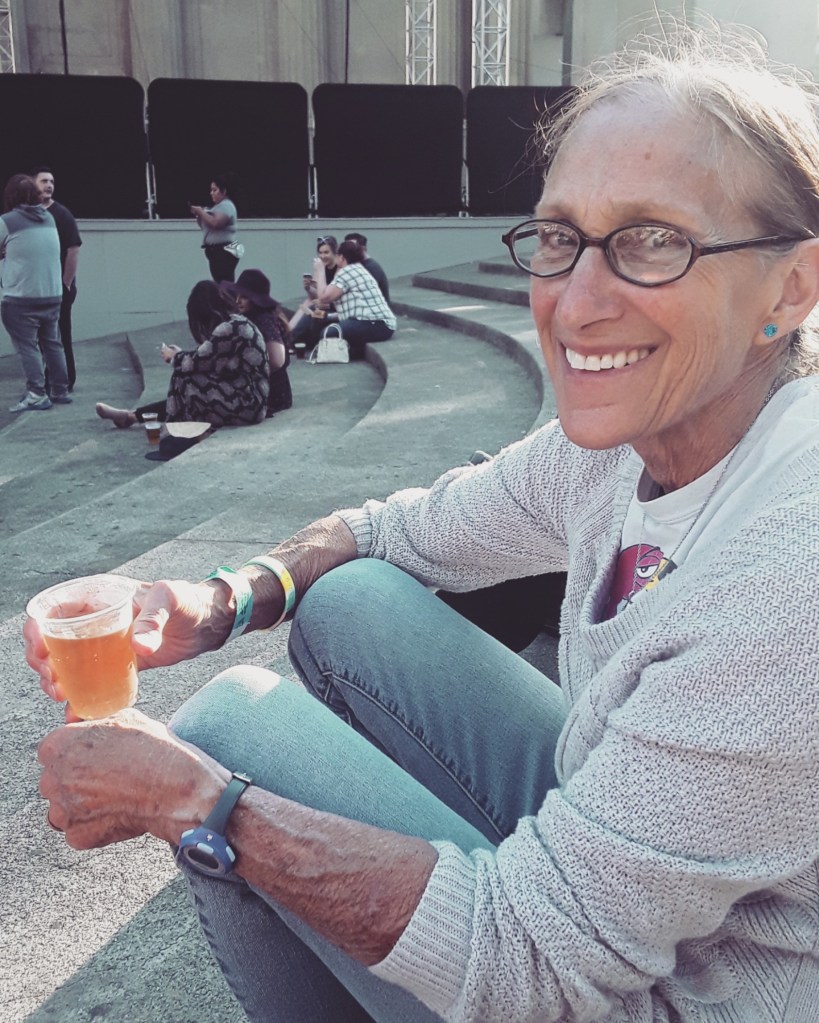
An hour before the concert was scheduled to start we claimed some ground level steps a mere thirty feet from the stage. A decade ago I would have stood right up next to it so I could drink in all of the sound waves and arresting musicianship. But this time was different. I was sitting with my mom sharing overpriced wine and curry, braiding her hair, and people watching as bright-eyed concert goers moseyed into the venue.
The first act was a talented singer from
Australia who swooned us with luminous vocals and acoustic guitar. Mom hardly
paid any mind to her. She had the distant, checked out look that someone with
dementia can sometimes wear. Overstimulated and a bit tired, she
didn’t respond much to my promptings of silly dance moves and jokes. On to the
next act.
Shakey Graves began to play and my smile engulfed me. I even danced, which is a bigger deal than you might expect.
To my right I see Mom bopping out of sync to the music, hint of a
smile forming on her face. My heart swells to the volume of my smile. Bringing
her was the right decision.
The August night at last equally inky and bright, Shakey Graves left the stage to make way for the headliner. When Lord Huron appeared the set began with no introduction, just the straightforwardness of a song and the enjoyable theatrics of colored lights. The band was accompanied by a background of romantic desert landscapes playing on multiple oblong screens. At one point a disco ball dropped and ten thousand dancing stars showered the venue, animating what the sky above could not.
Mom and I held hands, swayed and swiveled and tapped to the beat.
We payed tribute to the moment with our quiet offerings of movement, drowning
ourselves in the intoxicating sound waves and starlight.
An hour from midnight the show ended, the overhead lights punctuating the finality. I tensed slightly at the anticipation of navigating through the thick crowd with Mom in tow. Her maternal instinct, or so I assume, took charge and she pulled me through the ebbing mob of people. I had to gently tug her back a few times through our interlaced fingers to keep her from surging too forcefully between bodies. That, and I didn’t want to lose her.
Safely outside we had one more obstacle to navigate. Two flights
of stairs were the only path down to the street. The combination of it all, the
dark, the unfamiliar setting and the overwhelming amount of people, gave me
further hesitation. The last thing I wanted was for my mom to crumble down a
set of concrete steps.
Pushing aside an annoying yet brief flash of impatience, I took a
deep breath and guided her to the railing. Steadying the left half of herself
by gripping my arm we made our way down, slowly and with purpose. Another wave
of anxiety flooded me when I made the mistake of peeking over my shoulder to
witness the hundreds of people behind us eager to move forward into the night.
“Take your time. There’s no rush,” I coaxed as equally to her as to me.
A few times she tried to move too quickly, closely missing a
chance tumble or unnatural twist. Thankfully we avoided any incident or injury,
in part to the collaboration of those around us. I am impressed by the
graciousness of the college students directly behind us who echoed my sentiments.
They gave us space to move and shielded us from any potential surge from the
crowd. Not once did they roll their eyes or sigh at the half-speed of our pace.
Past the first hour of morning I pulled up in front of the
driveway of Mom’s house. She slept not a wink the whole ride home, proving me
wrong for my assumption that she would pass out the moment she tucked into the
passenger seat for the return trip.
Unabashedly more exhausted than the woman twice my age, I was
eager for my bed to swathe me in a dream state.
I don’t remember any dreams from that night, but I do know that the evening’s events provided enough gratification for a few hours of peace. Such a mighty gift amid the struggle that is disease.
Two kids. One born of my flesh and one adopted. That has been my vision for as long as I can remember, since the days of playing MASH and passing notes to classmates.
I, like many of my childhood friends, naively believed we would be married with kids and owning homes by the time we hit our mid-twenties. Twenty-five was considered old. Grown up. You knew things when you were twenty-five.
Most who are currently in their mid-twenties, and certainly beyond, will find this concept laughable. Sure, some people do have the “white picket fence American dream” of starting a traditional family by the time they can rent a car. But it often doesn’t last. And it’s hardly without hardship. The Americana of yesteryear isn’t reality for the youngest generations today. The truth is that the number of hours one may spend planning their life often doesn’t dictate the outcome. Life is guaranteed to throw curveballs.
I’m thirty-two. It’s much more common for my peers to find themselves experiencing these traditional milestones at this age than when we were a decade younger.
I can count nearly a dozen friends and acquaintances who have either gotten engaged, married, or pregnant in the last twelve months. Of course I am over the moon with each notification of others’ life changing events, often crying tears of joy on their behalf. It’s not a race or a competition, and it never should be. But on the flip side, it can be hard sitting on the sidelines of highly celebrated milestones month after month. It can feel like I’m enthusiastically waving encouragement from a mud pit on the side of a road as people I love parade by with their good news. These two perspectives are both at odds with one another and entwined, making me feel selfish for the whole lot of it. And rarely have I shared this with anyone because the last thing I want to do is make my friends feel guilty or weird for wanting to share the highlights of their lives. Even on tough days, I need good news. I need to be reminded that life still goes on.
During the last five years my perspective has shifted gears a lot. I was in a long term, serious relationship toward the end of my twenties. Deeply in love and committed to my partner, I was for the first time confident that someone loved me mutually. We were supposed to get married.
He dumped me unexpectedly a month before the surprise birthday party I had planned for his thirtieth. My embarrassment was further fueled by the need to notify his friends in California and abroad that the celebration, only weeks away, was canceled. Several months of planning and anticipation quickly and brutally meant nothing.
We never once had a conversation about us getting married, only danced around the topic in general terms. The consequences were a heart-deep blow and an important lesson about communication.
In the many months post-breakup I channeled my grief and bewilderment into planning a solo, forty-eight state road trip. I won’t get into that right now as there is a whole other blog dedicated to that endeavor, but I will be mentioning it from time to time in this venue.
Forever will I reverberate: It was one of the best decisions I made during my lifetime.
Toward the end of those travels I fell in love with Denver, Colorado. I ached to move there with a friend who had similar aspirations. I looked up available jobs at a nearby national park. I scouted apartments and houses.
Shortly after returning from the road my journey as a caregiver began to take shape, leading me further and further from Denver.
I instead found my freedoms in hiking and camping and taking trips whenever my schedule or finances allowed.
As those, too, were replaced by the continuous addition of caregiving burdens, I launched into my thirties with a trajectory never foreseen by a younger me.
Dating became increasingly sparse, unimpressive, and frustrating, even when looking for the most casual of relationships. I’ve found my patience for modern dating practices, or lack thereof, wearing thinner as time goes on. Repeatedly dealing with dick pics, catfishing, and ghosting (Could I sound any more like a millenial?) caused me to begin making plans to approach parenthood as a single mother. I vowed that by the time I turn thirty-six I would either adopt or find a sperm donor. And with each passing year it looked more and more like that might be the case.
But of course this has also waned, succumbing to the grittier consequences of caregiving. Since last year any daydream of caring for a baby of my own makes me want to wail. As much as I have given thought about one day creating a family, in whatever form it comes to be, I can no longer bare it. Even while writing this I feel a physical reaction. Tears well up, my stomach braces itself to retch. Both shoulders tense as if for impact.
I cannot stand the thought of caring for another living thing right now. I will not do it.
And my widened understanding of sacrificing independence and money and emotional reserves for another person has definitely dampened my romanticization of motherhood. Maybe that’s not necessarily a bad thing.
I’m aware that I likely won’t always feel this way. This reaction is to the immense stress I have to deal with on a daily basis now. It’s part of why I become privately weepy when thinking about it. It’s a natural reaction to what I’m experiencing. I grieve my mother’s slow death. I mourn the life I once had, the opportunities that keep slipping away. I combat the frustration and resentment that bubbles up in challenging moments.
Yes, I am grateful for so much. I give thanks often to my many privileges. But my gratitude is allowed to co-exist with the grief.
I do secretly wonder if all of this will eventually lead me to my own family in the future. The lessons of patience and practicality, empathy and problem solving, that I stack up on this journey have to be worth something. I don’t think it’s farfetched to assume they might be applied to motherhood. For now, though, I bow to dementia. Not announcing defeat or accepting pity, but digging my fingernails deeper in anticipation for the day I can let go.
***Please note this essay is a snapshot of our routine as of a year ago.***
Every work day begins the same. Mom lives one town over from me and hasn’t been driving for over a year. My routine starts with listening to fifteen minutes of a favorite podcast, usually true crime, human interest, or something science based, on my drive over to her house. The moment I pull up in front of her driveway I quickly switch to a carefully curated playlist on Spotify. Often the music rotates between bands like the Beach Boys or Fleetwood Mac, familiar and beloved songs that I love, but more importantly, that she loves. Some days call for something upbeat and modern, like Beyonce or Maggie Rogers. Music lifts her mood and engages her. It brightens her face and gifts us with a moment of untainted joy.
The speakers pulsate with their audio medicine, dosing us with relief. From time to time she drops her red, quilted gym bag before climbing into the car, and dances. Her flailing and audacious arm movements cause a fit of ugly laughing, the kind reserved for family and close friends. The kind of obnoxious noise that only someone who loves me can tolerate.
On bad days she doesn’t dance.
After she places the red bag at the foot of the passenger seat she climbs in and attempts to buckle up. Usually she can do it herself, but admittedly I don’t always have the patience to let her. We collectively dislike the aggressive beeps of the car when the buckle isn’t inserted quickly enough for its satisfaction.
“Are you ready Mom? Are you? Are you ready for this?” I tease.
Then I turn up the volume.
The beat evokes hand gestures and head swaying like I’ve never seen. She points her finger to the beat, at pedestrians and other drivers. She rocks forward, backward, forward, backward. Hands play the drums on the glove box. Her head wiggles in impossible ways and her foot taps out of sync.
I love it.
I imitate whatever dance she’s featuring for the day. I giggle at her, at me, at the wonderful absurdities that happen inside the confines of the Subaru.
On occasion we don’t get out of the car as soon as it’s
parked outside of my work. Sometimes the song is too good. Sometimes I want to
feed our laughter just a moment longer. And once in a while I would rather stay
in the car dancing with her than go to work.
Twenty-eight minutes from my front door to her front door to the entrance of my workplace. I’ve gone through this morning routine many times, both willingly and not. For her, time is a concept no longer grasped with clarity. In her reality those twenty-minutes could be five minutes or they are an hour. To me they are not a measurement of time, but of a chance to shield ourselves from disease and sorrow, frustration and regret. They are twenty-eight minutes in a parallel universe. Twenty-eight measures of freedom, if only for a blink.
**Please note that this essay was originally compiled as of several weeks ago before we became quarantined by the COVID-19 pandemic.**
It started with a disagreement with my dad. I was living with him at the time and he was being, in my opinion, unempathetic. Stressed out and feeling like I had limited options, I chose to move out. Even though the catalyst was born of defiance and pride, and was equally a financial necessity, my decision to move into my mom’s house ended up being the right choice. It was time for her to receive the next level of care. I couldn’t afford to hire a caregiver for her or even afford my own apartment for that matter, so it made sense. And with that commitment, internally I recoiled.
I like to believe that most adults prefer their own space to one degree or another. I am thirty-two now. I’ve always been independent and leaned toward the introverted-heavy side of my personality. Being in my thirties and living back at home with family wasn’t what I ever envisioned for myself, but yet, neither was Alzheimer’s.
Since I was moving from one parent’s house to another’s, I had the luxury of using a handful of weekends to complete the move. On the last weekend Dad helped me move furniture with his truck. As he was getting ready to leave he uncharacteristically asked, “Are you okay?”
“No. I’m not okay.”
The tears and hyperventilating came like a gust of wind, carrying me where I didn’t want to go and with a force that felt violating.
I didn’t want to be living with Mom. I wanted my life back. I wanted everything to be better and to have the ability to live each day as I wanted, not at the mercy of illness.
And I didn’t want to feel guilty for feeling this way, for feeling selfish and self-absorbed.
Ah, caregiving in a nutshell.
Dad and I talked for awhile in his car. He actively listened. He tried to offer advice, offer solutions. I could see that as a parent it pained him to see me broken. In these moments I knew him to exude the highest level of compassion, and it made me feel a little less invisible.
In the months following September, after I officially finished moving in, it’s been a rough ride. Anxiety manifested in ways I didn’t expect. I began experiencing my own health problems. Self-care was sabotaged by a natural disaster emergency. (More on these two topics later). And overall, being at home didn’t feel relaxing or fully “safe”, as it should. Home was synonymous with being on duty, persistently and randomly being interrupted by Mom needing help with something. New responsibility came with each quiet knock on my bedroom door and her asking me the umpteenth question. Other times I was urged out of my room by the sounds of something troublesome, a crash or her muttering angrily to herself. Sometimes I was beckoned by a bought of silence.
I was morphing more fully into a mother, always anticipating the next moment of need or concern or protection, never truly at ease.
Now, nearly six months deep into live-in caregiving, things have settled a bit. We finally have a basic routine that feels comfortable. We get on each others nerves less. I have accepted some of her dementia quirks, mostly given up on the unnecessary frustration of trying to control them.
This doesn’t mean everything is sunshine and rainbows. I still get annoyed or upset on occasion, and the same goes for Mom. But I have to remind myself of how far we’ve come from. Letting go of control, especially when it feels like the only thing I have going for me, is a hurdle as high as my own stubbornness and fear. Often that hurdle was towering. It’s waned now, but still there. Some days I can stand nothing but to bury myself beside it, waiting to feel brave enough again to stand up and take on the next day, the next moment even. To stand in stillness or to inch forward, just anything but backward.




 Little Spark of Madness